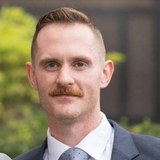
Sean D. Egan, PhD
Building Information Warfare tools with AI and machine learning.
I'm an applied AI practitioner, a published scientist, and a fully qualified Information Warfare Officer in the U.S. Navy. Most people know the mission or the models. I know both, and I spend my days between them. I bring operational tools that I build with agentic AI to the Navy, I train my own models for weather and orbits, and I research how language models work inside. On duty, I help defend the nation in the information space. I build tools for my fellow Information Warriors and for partners across defense and the intelligence community, and several are now used in operations. The rest of my time goes to a really good group of friends and a lot of live music.
I've had the good fortune to lead some of the brightest and most tenacious Sailors, Airmen, and Marines our military has to offer. Now that I've moved to the Navy Reserve, I'm looking for a senior role in applied AI for intelligence and defense.
MY AI/ML STATS AT A GLANCE
Sites
Tools and teaching sites for Information Warfare Officers and Sailors, guides for Sailors, and plain-language books on machine learning, built with Derek Conklin, David Robinson, and Taylor Wulff-Morrison on our own time. Some are used in operations, and some teach as they work. On orders, I've sat with operators who had them open on their screens, without knowing I'd built them.
Information Warfare
Navy
AI & Machine Learning
marks a site that needs a DoD Common Access Card. No card? The AI Tools Field Guide is the open edition.
AI and machine learning
This is my own research and model training, run on three graphics cards at home and on DoD supercomputers. Each study has a public page with its live status. Research overview and live status
With special thanks to the DoD High Performance Computing Modernization Program, which provided the supercomputing behind the research below.
-
LANGUAGE MODELSHow a language model should read a word
A language model starts by looking up a fixed vector for each token. I tested whether building that vector instead, as a sparse mix from a shared learned dictionary at matched cost, helps the model handle word combinations it never saw. Across 270 runs the main hypotheses failed: no version beat the plain lookup table, and the published baseline did not reproduce in my setup.
As of 4 October 2026, one lead survives, on binding words to their roles, and a 177-run follow-up to test it is running on the H100 cluster.
-
SCIENTIFIC PAPERSA referee that checks claims against the data
I'm training two open models for scientific papers: a referee, rewarded by code when a paper's claim reproduces from its data, and a cleaner that removes machine-written phrasing without moving a number. Prompted with no training, a 235-billion-parameter model caught 3 of the 51 problems an outside reviewer found in our two orbit papers.
As of 4 October 2026, the cleaner's fine-tune failed on a code error, fixed but not yet rerun, and the referee's baseline waits for its test data to pass quality checks.
-
TRAINING MODELSWeather models, trained at home
I leveraged the heck out of three NVIDIA RTX 4080 cards to train models that turn satellite and radar data into what a forecaster needs: where the rain will be in an hour, and what radar would show where there is none. They power the weather viewer.
As of 4 October 2026, the record holds 82 finished training runs on my home cards and 19 on DoD supercomputers, with held-out scores published.
-
ORBITSHow satellites are flown, from the public catalog
Derek Conklin and I study how satellites are flown, using the public orbital catalog. Our two papers ask whether station-keeping relaxes before a geostationary satellite retires, and how to detect maneuvers at a measured, published false-alarm rate.
As of 4 October 2026, both papers are under review at Acta Astronautica, and 12 related studies are on DoD supercomputers.
Also: Bob, the agent I built for my friends, who keeps four of us in the military in touch across time zones and bad links.
Military service
I served ten years on active duty and now serve in the Reserve Component, as a Navy Information Warfare Officer. My field is meteorology and oceanography, with time in space operations and intelligence.
-
Reserve, currentNaval Oceanography Operations Command (NOOC)
Supporting global undersea warfare and reachback.
-
Reserve, 2025Fleet Weather Center Norfolk
Activated to help redevelop the tropical cyclone concept of operations and to train new officers.
-
2022 – 2025Fleet Weather Center Norfolk, Aviation Detachment Germany
Officer in charge. Aviation weather and resource protection for Navy and Marine Corps units in Europe, Africa, and the Middle East.
-
2022 – 202524th and 450th Intelligence Squadrons
Information Warfare liaison. Brought Navy personnel into all-source intelligence work.
-
2018 – 2022Joint Typhoon Warning Center
Operations officer and typhoon duty officer. Tropical cyclone forecasts and warnings for the Pacific and Indian Oceans.
-
2015 – 2018Enlisted service, commissioning, and Information Warfare officer training
Enlisted in August 2015, then Officer Candidate School in Newport, Rhode Island, and commissioned in March 2017. Officer training followed in the Information Warfare Basic Course at Information Warfare Training Command Virginia Beach.
The CV has the detail.
Research
-
NEXT UP
I proposed two more studies, approved on 4 October 2026, and neither has run yet. One asks which nonlinearity a trained network learns at each depth, and a 36-run grid for it is ready. The other asks whether feed-forward (MLP) layers that change their computation with context succeed where building the input vector did not, and a 135-run grid for it is ready.
-
PAPERS
- Egan, S. D., and Conklin, D. (2026). Does station-keeping relax before retirement? A registered, population-scale observational test in the geostationary belt. Zenodo (preprint). doi:10.5281/zenodo.22884814. Submitted to Acta Astronautica (under review).
- Egan, S. D., and Conklin, D. (2026). A continuously audited, publicly gated false-alarm control for manoeuvre detection from two-line element sets. Zenodo (preprint). doi:10.5281/zenodo.22884816. Submitted to Acta Astronautica (under review).
More papers
- Howell, B., Egan, S., and Fine, C. (2022). Application of Microwave Space-Based Environmental Monitoring (SBEM) Data for Operational Tropical Cyclone Intensity Estimation at the Joint Typhoon Warning Center. Bulletin of the American Meteorological Society, 103(10), E2315–E2322. doi:10.1175/BAMS-D-21-0180.1
- Egan, S. D., Stuefer, M., Webley, P. W., Lopez, T., Cahill, C. F., and Hirtl, M. (2020). Modeling volcanic ash aggregation processes and related impacts on the April–May 2010 eruptions of Eyjafjallajökull volcano with WRF-Chem. Natural Hazards and Earth System Sciences, 20, 2721–2737. doi:10.5194/nhess-20-2721-2020
- Egan, S. D. (2019). Modeling volcanic ash and sulfur dioxide with the Weather Research Forecasting with Chemistry (WRF-Chem) model. Ph.D. dissertation, University of Alaska Fairbanks. hdl:11122/10895
- Egan, S. D., Stuefer, M., Webley, P., and Cahill, C. F. (2015). WRF-Chem modeling of sulfur dioxide emissions from the 2008 Kasatochi Volcano. Annals of Geophysics, 57. doi:10.4401/ag-6626
- Stuefer, M., Freitas, S. R., Grell, G., Webley, P., Peckham, S., McKeen, S. A., and Egan, S. D. (2013). Inclusion of ash and SO2 emissions from volcanic eruptions in WRF-Chem: development and some applications. Geoscientific Model Development, 6, 457–468. doi:10.5194/gmd-6-457-2013
Education and teaching
-
EDUCATION
- Ph.D., Atmospheric ChemistryUniversity of Alaska Fairbanks, 2019NOAA and NASA research grants paid for it, and I did it on my own time while on active duty, writing the dissertation on the watch floor of the Joint Typhoon Warning Center.
- Graduate Certificate, Space Systems FundamentalsNaval Postgraduate School, 2021
-
TEACHING
- Adjunct professor of chemistry since 2020, for Rasmussen University and, while I was stationed in Germany, the University of Maryland Global Campus.
- Science and math subject matter expert for StraighterLine, 2020 to 2025. I redeveloped their science and math curricula, and every science lab course they offer has my fingerprints on it, from general chemistry and microbiology to calculus-based physics and genetics.
-
THE INFORMED
Founder and lead of a volunteer group of scientists and service members. We find problems in Navy meteorology, oceanography, and space that nobody funded, build the fix, and hand it over free.
Technical
- Agent systems: Claude API and Claude Code, Codex; multi-agent orchestration; retrieval; prompt caching; guardrails; evaluation gates; cost ledgers
- Models and serving: PyTorch, multi-GPU training, vLLM, AWQ quantized serving, LoRA, DoD HPCMP and Slurm
- Science: satellite meteorology, tropical cyclones, space weather, orbital mechanics, SAR, WRF-Chem; Python, Fortran, C/C++
- English (native); German and Spanish (full professional proficiency)
Qualifications and decorations
- Information Warfare Officer · Meteorology and Oceanography Officer · Navy Space Cadre
- TS/SCI clearance, read in; details on request
- Meritorious Service Medal · Navy and Marine Corps Commendation Medal · Joint Service Achievement Medal
Languages
- English, German, Spanish
Off duty
My husband Dave and I have been together twenty years; we were civilians who decided to join the Navy together. He's an officer now too, and one of the developers behind these sites. He went from enlisted to officer, and I was in Newport, Rhode Island, to see him commissioned. I didn't grow up with a family, so I built one. The people I build these things with are it.
Where I’m from, and the music
From Anchorage; Fairbanks for years after. I've lived in Los Angeles, Berlin, Charleston, Honolulu, Frankfurt, and Naples, and these days I split my time between Cádiz, Spain and Norfolk, Virginia. I get back to Alaska whenever I can, preferably with time in the mountains.
Usually near the rail. Progressive house, techno, UK garage, drum & bass. If there's a good show in New York, I'm probably there with my army buddy Matt.
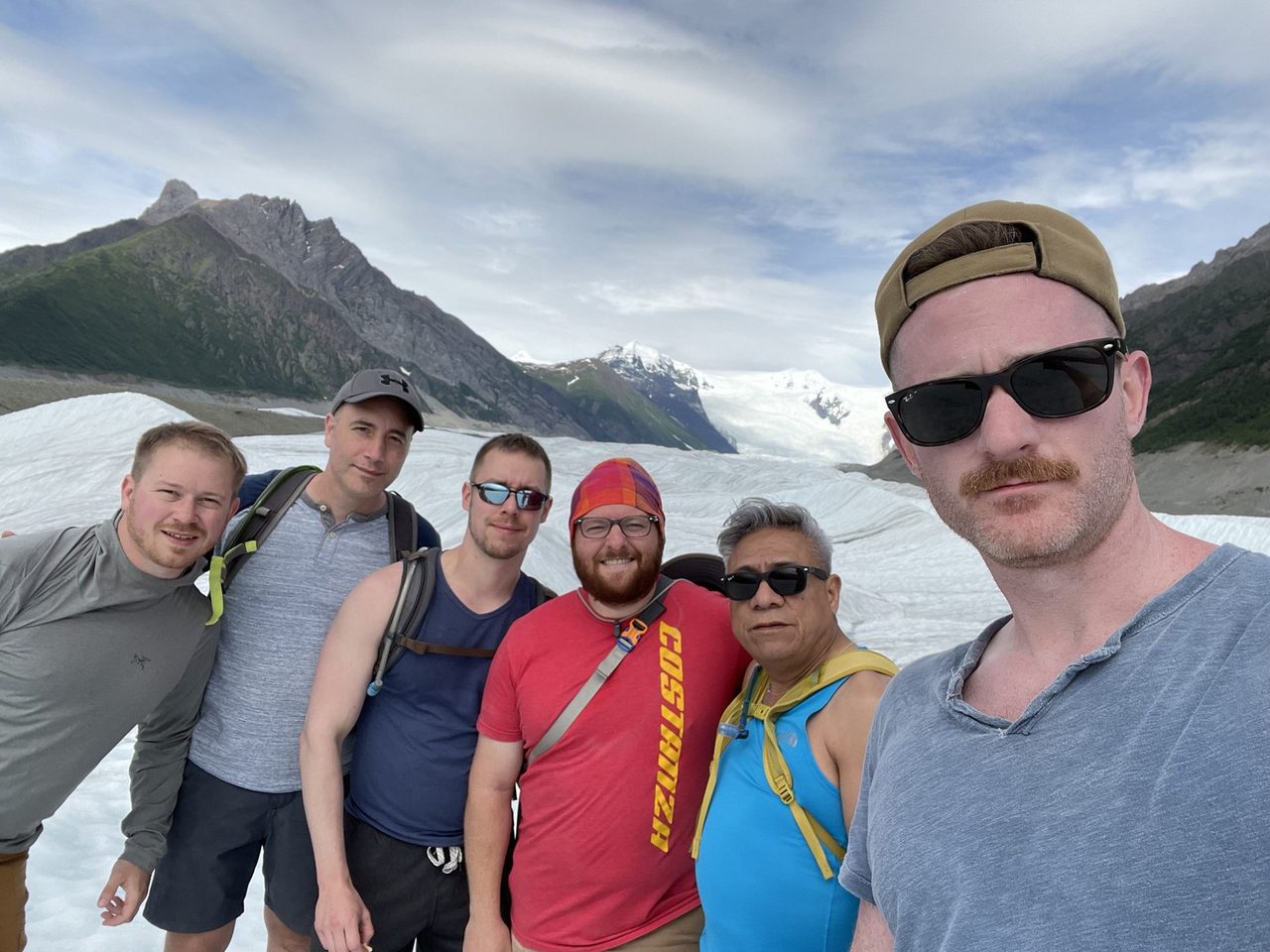
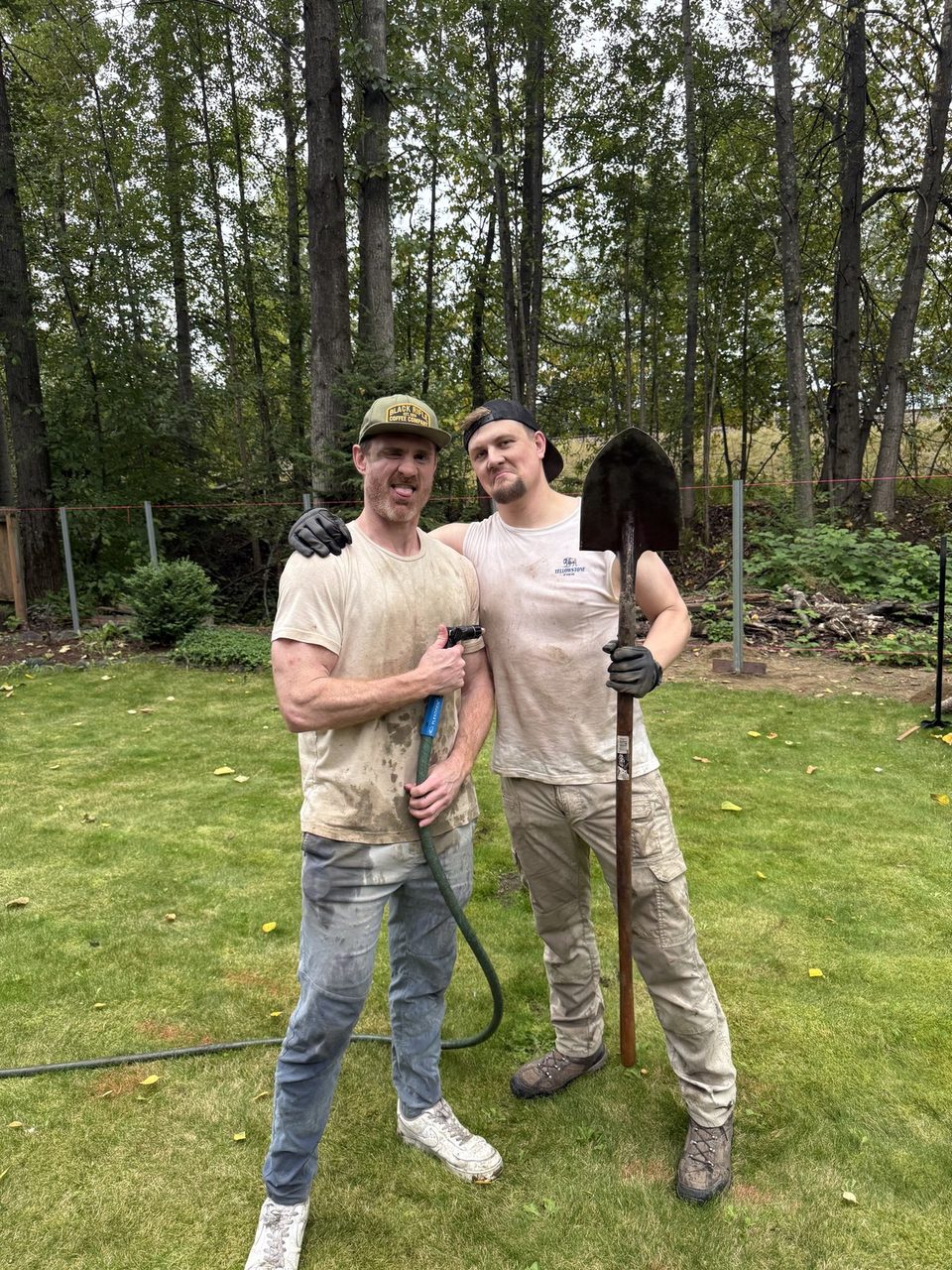
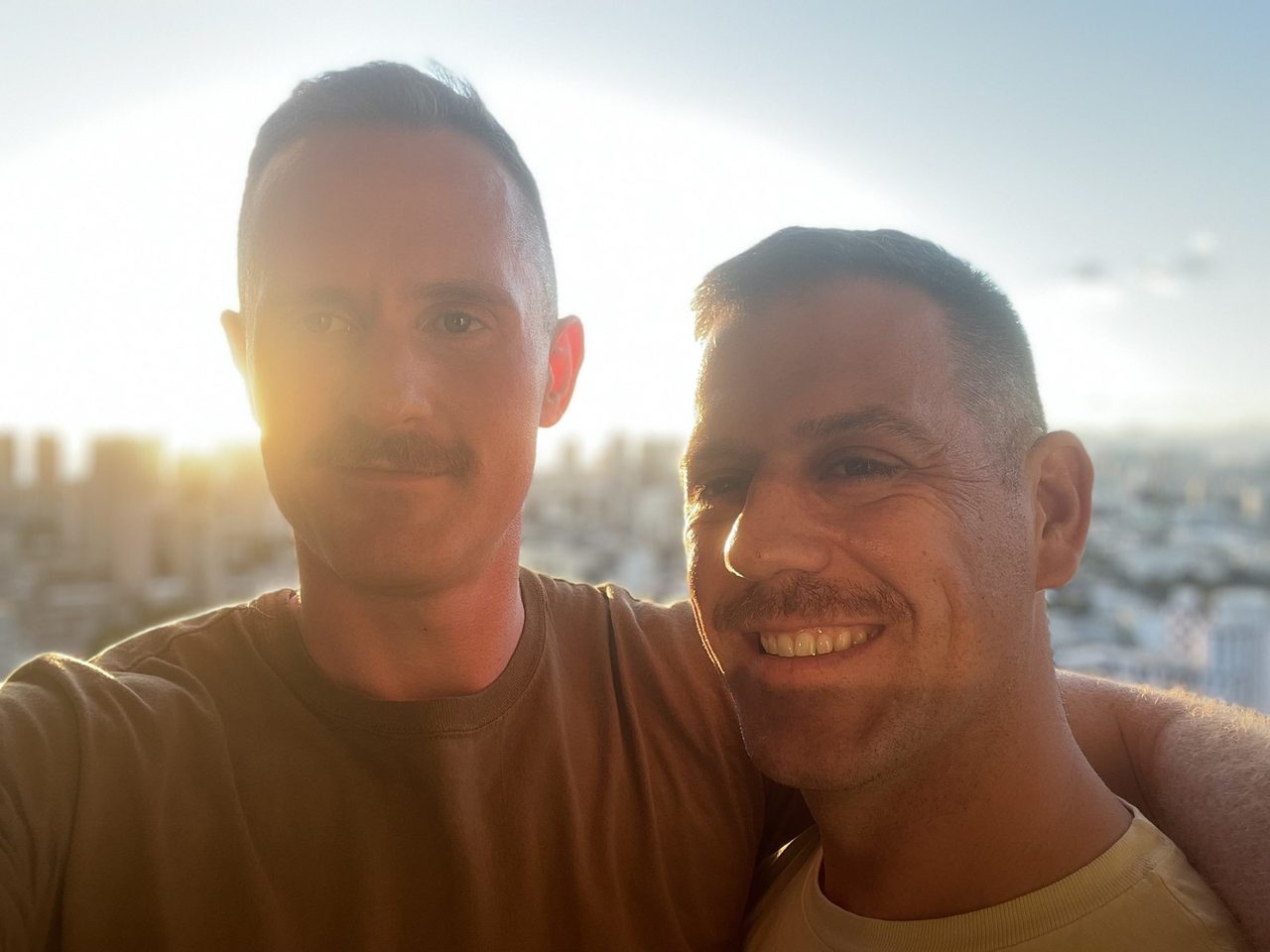
Captions
- Hiking on Kennicott Glacier.
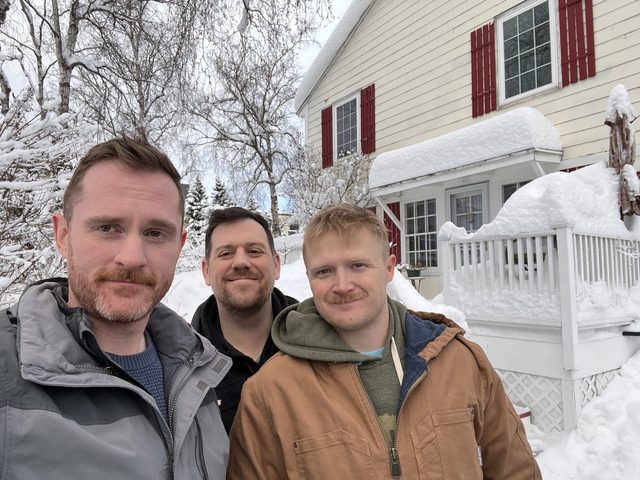
- Building a fence at Andrew's house. Concrete is messy.
- Dave and me back home, getting some midnight sun.
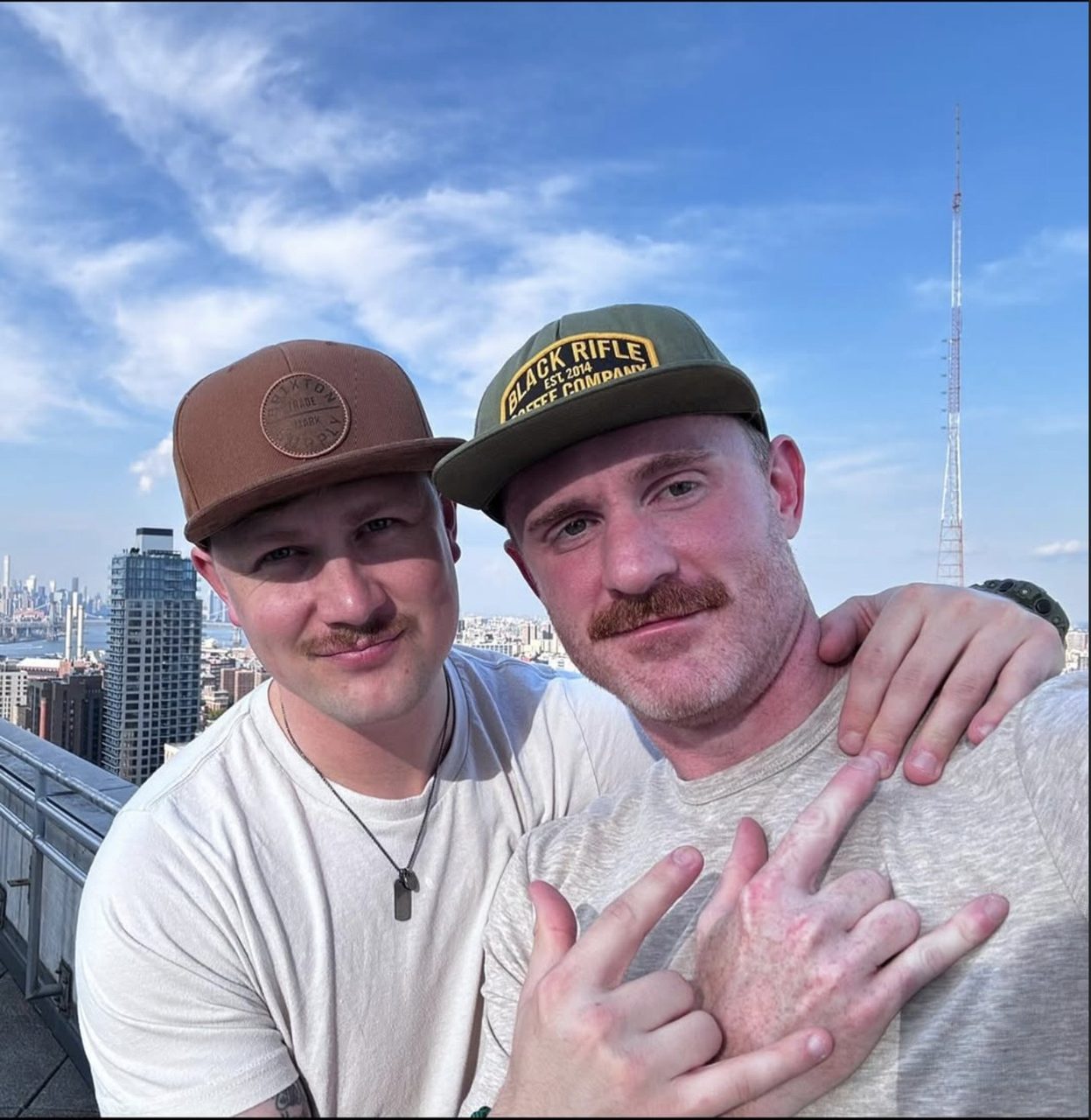
- Derek and me on the roof of Matt's apartment.
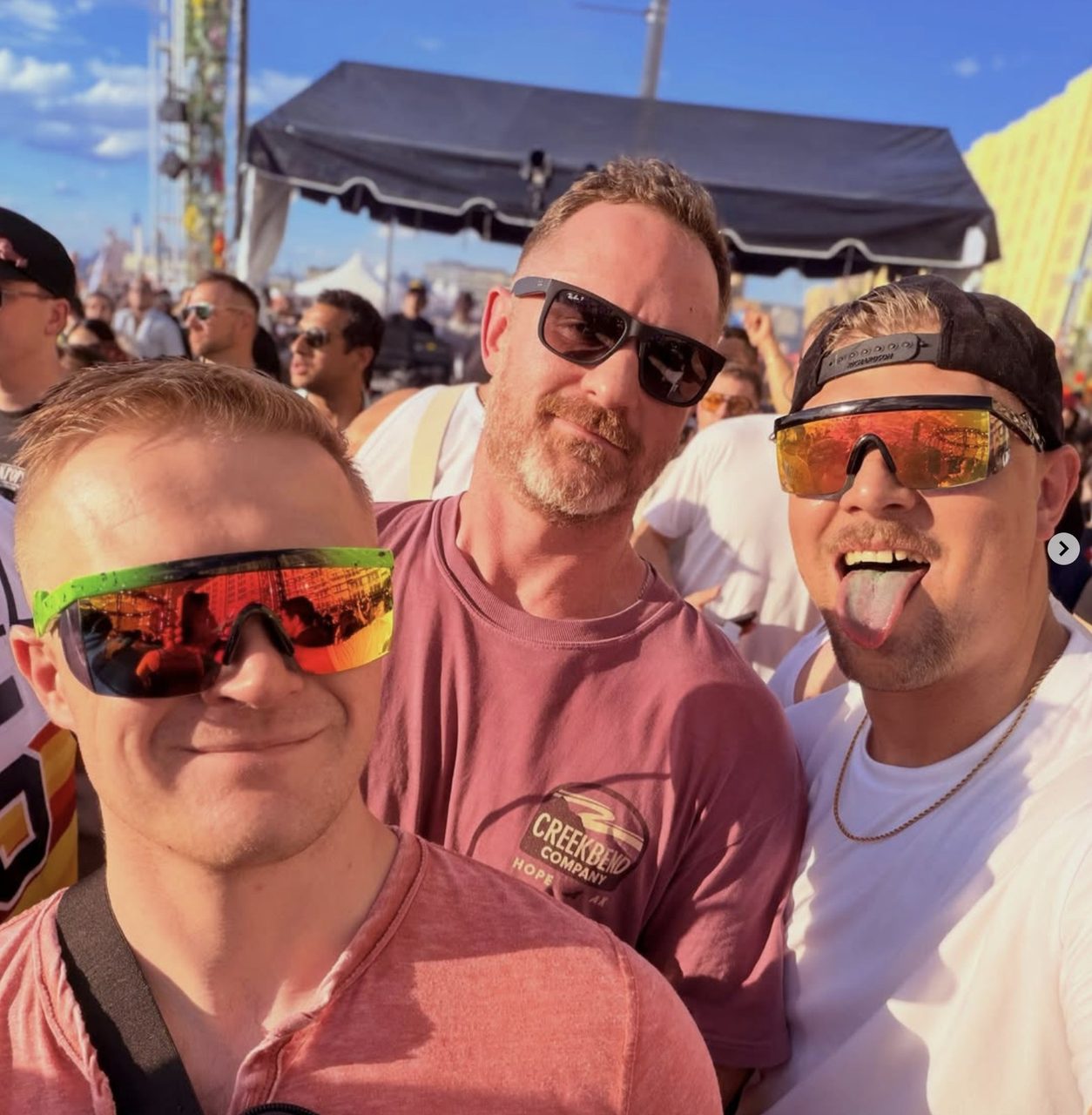
- Lane 8 and Sultan + Shepard at the Army Terminal, with the guys.
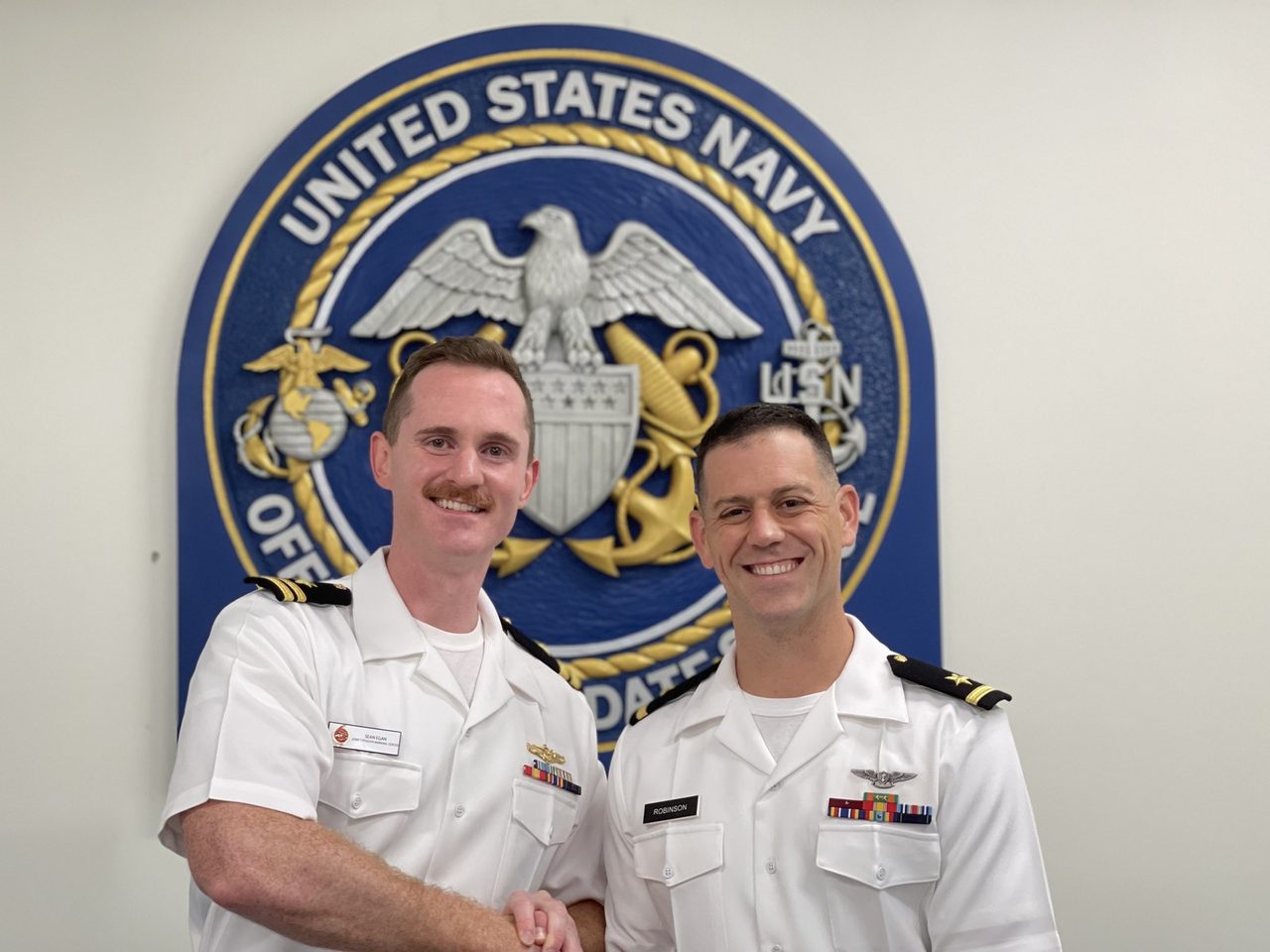
- Dave's commissioning day.
More photos
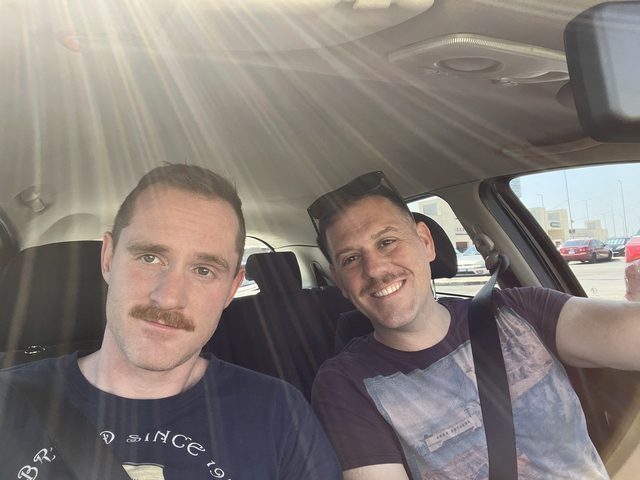
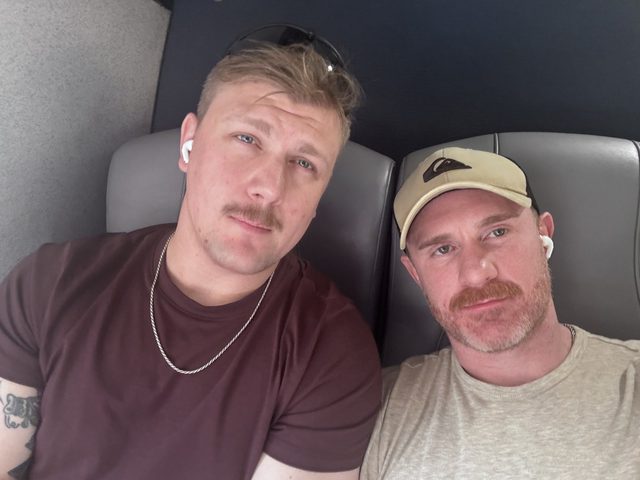
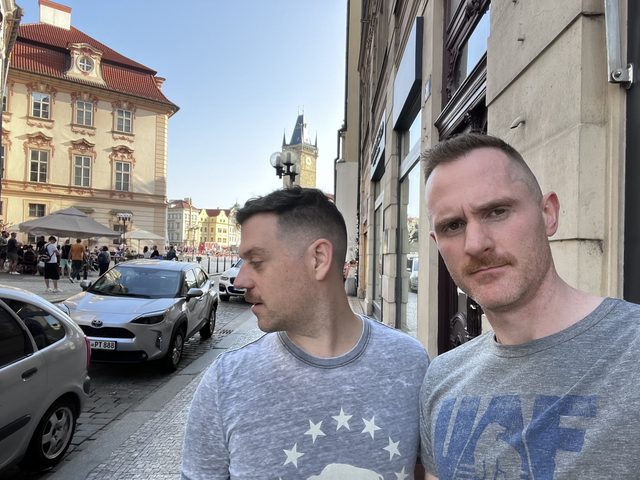

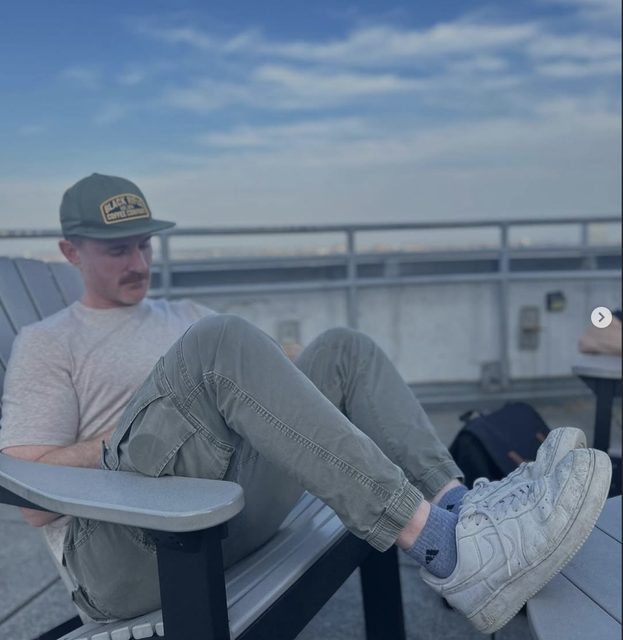
Contact
If you're building applied AI for intelligence and defense, I'd love to talk. I'd like a mission to own, a team to work with, and my hands still on the work. I'm open to full-time or a project arrangement, and I'm happy to relocate.
What I'd most like to do is help bring these tools to the intelligence community and the Department of Defense, and help their leaders understand what's available and how to put it to use. I've learned a lot by building with these tools, and I'd love to lend that to the people making the decisions.